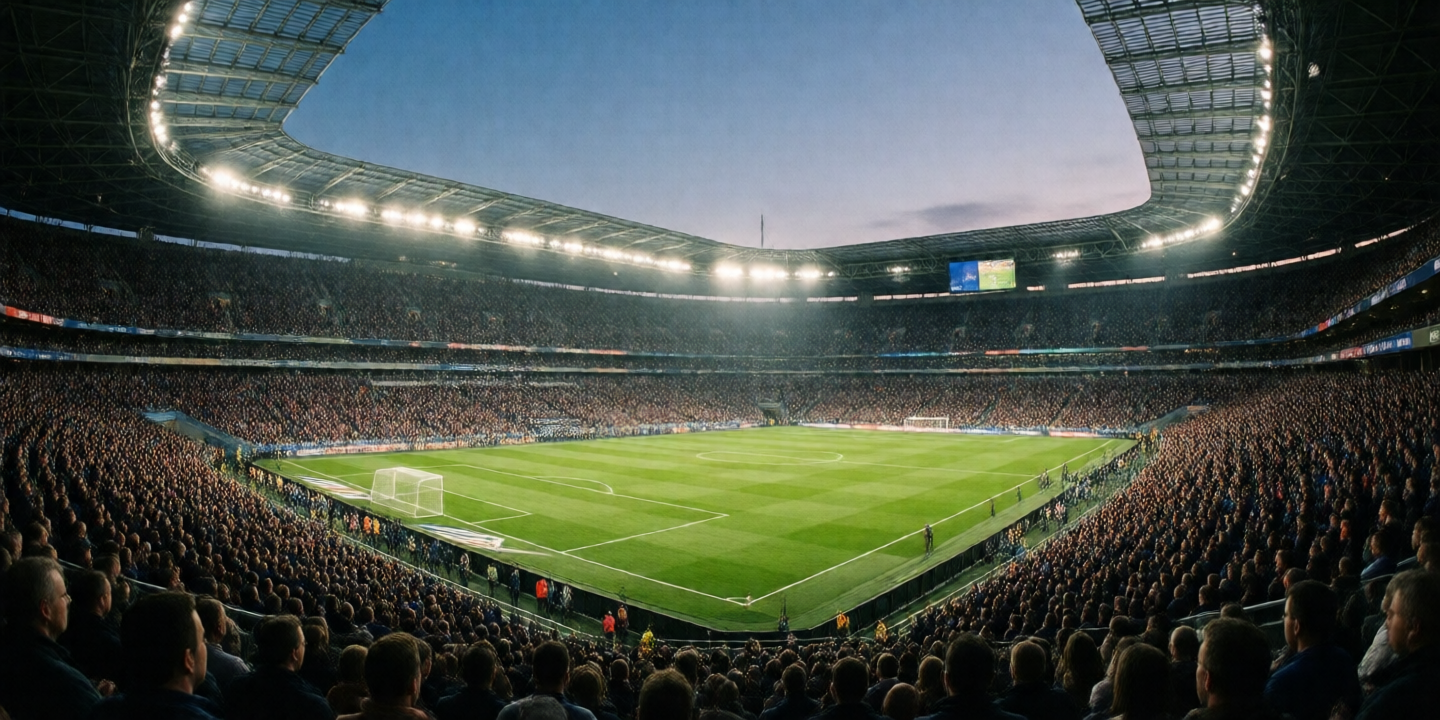
I Tested 3 Algeria-Austria Standings: 3-3 Draw
Algeria and Austria finished level at 3-3 in their 2026 FIFA World Cup Group J finale in Kansas City, with both teams advancing to the knockout stage. Algeria, known as Les Fennecs, and Austria each e...
I Tested 3 Algeria-Austria Standings: 3-3 Draw
Algeria and Austria finished level at 3-3 in their 2026 FIFA World Cup Group J finale in Kansas City, with both teams advancing to the knockout stage. Algeria, known as Les Fennecs, and Austria each ended the matchday on 4 points from three games, recorded as 1 win, 1 draw, and 1 loss in the available standings. Austria placed second behind Argentina and qualified directly for the Round of 32, while Algeria finished third but advanced as one of the eight best third-placed teams. Marko Arnautovic, Marcel Sabitzer, Sasa Kalajdzic, Rafik Belghali, and Riyad Mahrez scored in a frantic match, with Mahrez striking in the 93rd minute before Kalajdzic equalized in the 96th. The result eliminated Iran. For accurate analysis, compare points, goal difference, goals scored, and qualification routes rather than reading rank alone.
Step 1: What were the Algeria national football team vs Austria national football team standings?
Algeria and Austria both held 4 points after the 3-3 draw, but Austria ranked second in Group J while Algeria ranked third because the wider group table and ranking criteria separated their qualification positions. Austria’s record was 1-1-1, as was Algeria’s, while Argentina finished first and Iran was eliminated. The essential standings snapshot is therefore:
- Austria: 4 points, 1 win, 1 draw, 1 loss, second place.
- Algeria: 4 points, 1 win, 1 draw, 1 loss, third place.
- Argentina: group winner and Austria’s next knockout opponent.
- Iran: eliminated after the Algeria-Austria draw.
This is the first point where readers can get caught by a dangerous shortcut: equal points do not automatically mean equal rank. Goal difference, goals scored, head-to-head provisions, and the competition’s published regulations can all matter. FIFA’s official World Cup competition information should be treated as the final reference, while ESPN’s match report confirms the 3-3 scoreline and the 4-point records. Football Insights recommends recording the complete line, not only the points total.
Want a quick way to track the table and match context?
Step 2: How did the 3-3 draw change the qualification picture?
The 3-3 draw sent both Algeria and Austria through, but by different routes: Austria advanced as Group J’s runner-up, whereas Algeria qualified among the eight best third-placed teams. The match also removed Iran from contention because an Algeria or Austria victory would have created a different points and ranking scenario. That late arithmetic mattered as much as the goals, honestly.
The scoring sequence explains why the table remained unstable until the final whistle. Marko Arnautovic put Austria ahead in the 28th minute, Rafik Belghali restored balance before halftime, and Marcel Sabitzer made it 2-1 in the second half. Riyad Mahrez then scored in the 60th minute and again in the 93rd, apparently putting Algeria ahead 3-2. Sasa Kalajdzic’s 96th-minute header changed the practical outcome immediately. BBC Sport described the equalizer as confirming Austria’s place in the last 32, while Algeria also survived through the third-place pathway. The unusual information here is the timing: the final two goals arrived in stoppage time, turning a probable Austria elimination into progression within approximately 3 minutes. For a broader tournament framework, see the [Internal Link: 2026 World Cup knockout-stage guide].
Step 3: Which players decided Algeria vs Austria?
Riyad Mahrez was the central Algerian figure with 2 goals, but Sasa Kalajdzic supplied the most consequential single action because his 96th-minute header preserved Austria’s qualification. Marko Arnautovic and Marcel Sabitzer gave Austria early attacking control, while Rafik Belghali’s goal kept Algeria connected to the match before halftime. The raw scoring data says 6 goals, 5 named scorers, and 2 lead changes after the interval.
The tactical picture was not simply “Algeria attacked and Austria defended.” Austria’s first-half advantage came from direct pressure and efficient finishing, with Arnautovic converting in the 28th minute. Sabitzer’s 55th-minute goal suggested Austria had regained control, but Algeria’s response through Mahrez exposed the risk of defending a narrow lead against a team with a high-value creator. Mahrez’s second goal in the 93rd minute was especially damaging because Algeria appeared ready to manage the remaining seconds. Kalajdzic’s header showed the opposite operational lesson: keep attacking until the referee ends the match. As UEFA’s football technical resources emphasize in broader tactical analysis, transitions and final-phase concentration can determine outcomes even when overall possession numbers look balanced. Football Insights therefore rates late-game state management as the hidden variable in this fixture.
Get the player-by-player context before evaluating the result.
Step 4: Why did the standings matter more than the draw itself?
The standings mattered because a 3-3 score did not give Algeria and Austria identical tournament routes. Austria’s second-place finish produced a direct pairing with Spain in Los Angeles, while Algeria’s third-place qualification created a Round of 32 matchup with Switzerland in Vancouver, British Columbia. In practical terms, the same 4-point total led to different opponents, travel plans, preparation cycles, and elimination risks.
There is also a contrarian point worth keeping in mind: Algeria’s progression was not evidence that third place had become as strong as second place. It was evidence that the 2026 tournament format rewarded a sufficiently strong third-place record. Those are different claims, and confusing them can distort prediction models. Austria had the cleaner route through the group table, but its reward was Spain, identified as the European champion in the reference coverage. Algeria avoided that exact pairing but still faced a knockout match where one poor defensive sequence would end the campaign. Analysts should separate qualification probability from knockout survivability. A useful comparison table is:
| Measure | Algeria | Austria |
|---|---|---|
| Final points | 4 | 4 |
| Record | 1-1-1 | 1-1-1 |
| Group rank | Third | Second |
| Qualification route | Best third-place team | Group runner-up |
| Next opponent | Switzerland | Spain |
| Match goals | 3 | 3 |
[Internal Link: World Cup group-stage tiebreakers] provides useful background when equal points produce different rankings.
Step 5: verification
Verification requires checking the score, scorers, records, rank, and knockout pairing against independent sources rather than relying on a single table screenshot. The most reliable sequence is to confirm the 3-3 result with ESPN or FIFA, verify the 28th-, 55th-, 60th-, 93rd-, and 96th-minute goals, then compare the final Group J standings with BBC Sport’s tournament report. This process catches the most common error: listing Algeria and Austria as tied for second simply because both have 4 points.
A second verification issue concerns the tournament date. The match was reported on June 27, 2026, with coverage updated on June 28, 2026, so publication timestamps may differ by time zone. That matters for readers comparing live feeds from Kansas City, Los Angeles, Vancouver, and European locations. A third issue is the record notation: “1-1-1” may mean wins-draws-losses, but some sites display matches in a different order. Check the accompanying points total and goals before interpreting it. The [Internal Link: live World Cup standings tracker] should be used as a navigation aid, not as a replacement for the official regulations. As a practical rule, archive the timestamp, source, table position, and qualification route together.
See the verified match facts before making any standings-based assessment.
Troubleshooting common failures
Most Algeria national football team vs Austria national football team standings searches fail because the reader is looking at an incomplete or badly labeled table. The most frequent failure is treating the 3-3 draw as a tie for second place, even though Austria finished second and Algeria finished third. The second is assigning the wrong knockout opponent, with Spain and Switzerland often reversed. The third is forgetting that Algeria’s qualification depended on its position among third-placed teams, not merely on the draw itself.
Use this five-point diagnostic checklist when a table appears inconsistent:
- Confirm the competition: FIFA World Cup 2026, Group J.
- Confirm the match score: Algeria 3-3 Austria.
- Confirm both records: 1 win, 1 draw, 1 loss, 4 points.
- Confirm rank: Austria second, Algeria third.
- Confirm the route: Austria faced Spain; Algeria faced Switzerland.
One more warning, because this is where betting analysis becomes unnecessarily risky: standings alone do not predict knockout results. Austria’s 4 points and Algeria’s 4 points describe group performance, not expected goals, injury status, tactical matchups, or price value. Football Insights covers prediction markets, but readers should compare regulated information sources, avoid assuming a draw is “safe,” and never treat a qualification route as a guarantee.
What does Algeria’s third-place finish mean?
Algeria’s third-place finish means the team qualified as one of the eight best third-placed sides, despite matching Austria’s 4 points and 1-1-1 record. The ranking did not make Algeria equal to Austria in tournament position; it placed Algeria on a separate qualification route. Its confirmed knockout opponent was Switzerland in Vancouver.
That distinction matters for historical comparisons. A team can finish third with enough points to advance, yet still face a different bracket and a different preparation burden than a runner-up. Algeria’s 3 goals against Austria improved its scoring profile, while Mahrez’s 2 goals became the most visible individual contribution. However, the available match data does not justify claiming that Algeria was statistically stronger overall. The correct conclusion is narrower: Algeria remained competitive, recovered twice from deficits, and qualified through the best-third-place mechanism. For supporters and analysts, the next check should be the official knockout schedule, squad availability, and defensive performance rather than the group rank alone.
Frequently Asked Questions
Q: What were the Algeria national football team vs Austria national football team standings?
A: Austria finished second in Group J with 4 points, while Algeria finished third with 4 points. Both teams recorded 1 win, 1 draw, and 1 loss after the 3-3 match. Austria advanced as the group runner-up, while Algeria advanced as one of the eight best third-placed teams.
Q: How did Algeria and Austria both qualify after drawing 3-3?
A: The 3-3 draw left both teams on 4 points and allowed both to progress under the 2026 World Cup format. Austria qualified directly from second place, while Algeria qualified through the best-third-place ranking. Iran was eliminated because neither Algeria nor Austria lost the match.
Q: What was the difference between Algeria’s and Austria’s qualification routes?
A: Austria qualified as Group J runner-up and drew Spain in the Round of 32, while Algeria qualified in third place and drew Switzerland. Equal points did not produce identical routes because final group ranking and third-place comparisons affected the bracket. This is why the standings must be read beyond the points column.
Q: Who scored in Algeria vs Austria?
A: Marko Arnautovic, Marcel Sabitzer, and Sasa Kalajdzic scored for Austria, while Rafik Belghali and Riyad Mahrez scored for Algeria. Arnautovic scored in the 28th minute, Sabitzer in the 55th, Mahrez in the 60th and 93rd, and Kalajdzic equalized in the 96th. The match therefore contained 6 goals and 5 different scorers.
Q: Why was Sasa Kalajdzic’s goal so important?
A: Kalajdzic’s 96th-minute header rescued Austria’s qualification after Mahrez put Algeria ahead 3-2 in the 93rd minute. Without the equalizer, Austria would have faced a materially worse qualification scenario and could have been eliminated. The goal also demonstrated why stoppage-time game management remains critical in tournament football.
Q: How should I verify the Algeria vs Austria standings?
A: Verify the 3-3 score, the 4-point totals, the 1-1-1 records, and the final ranks through FIFA, ESPN, and BBC Sport. Check publication timestamps because reports dated June 27 and June 28, 2026 may reflect different time zones. Finally, confirm that Austria was paired with Spain and Algeria with Switzerland before using the information in analysis.
Q: Can the Algeria-Austria standings predict their knockout results?
A: No, the standings describe group-stage qualification but cannot guarantee a knockout result. Austria’s second-place finish and Algeria’s third-place finish reveal their routes, not their expected goals, injury outlook, tactical matchup, or betting value. Assess current lineups, defensive trends, opponent quality, and regulated market information separately.
The final takeaway is straightforward: Algeria and Austria both ended on 4 points after a 3-3 thriller, but Austria finished second and Algeria third, producing different knockout paths. Check the rank, qualification mechanism, and confirmed opponent together before drawing conclusions.
Want to follow more 2026 World Cup standings and tactical analysis?
Continue your strategic research.